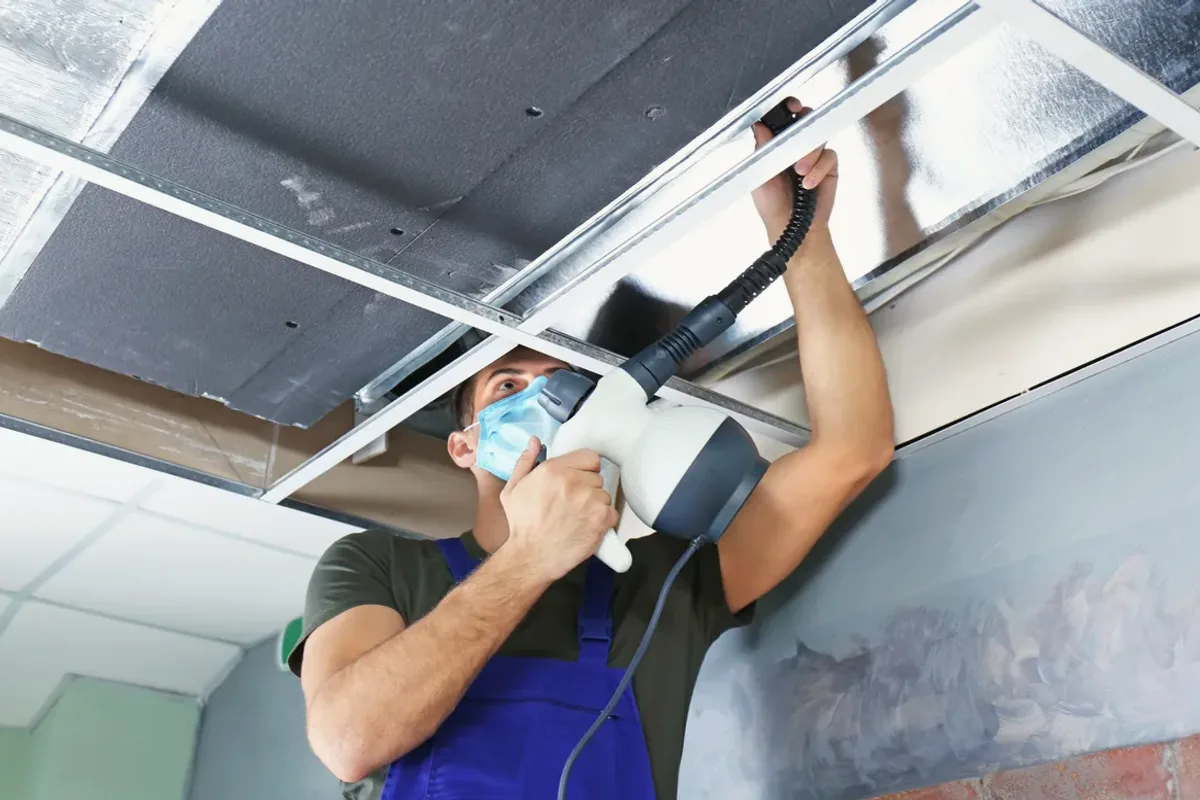
Request duct cleaning for a property in Strathroy. Include the equipment, the problem or planned work, and your location so the request can be reviewed.
Is there visible debris in the ducts or a specific reason to inspect them, such as recent construction work?
Duct cleaning is most usefully considered when inspection finds visible debris, construction residue, or another specific condition in accessible ductwork. Dust at a register alone does not establish that the full system needs cleaning, and cleaning is not a routine calendar task. The assessment should identify which supply and return sections are accessible, whether the air handler or blower compartment is included, and whether any duct is disconnected or damaged. Those findings distinguish cleaning from duct repair or a separate equipment service.
The assessment should inspect representative supply and return sections, registers, and relevant air-handler areas, then document the type and extent of debris. It should also note disconnected, corroded, or otherwise damaged ductwork because cleaning does not correct those defects. Findings determine whether cleaning is warranted, which areas are included, or whether a separate repair should be considered.
Supply and return duct inspection and debris removal
Registers, blower compartments, agitation, and vacuum collection
Construction residue and distinction between cleaning and duct repair
Assessment and Scope
Questions for the Proposed Work
01
Confirm that the condition calls for cleaning
Inspection helps distinguish accumulated material inside ductwork from dust on registers or other surface debris. Recent construction may leave residue, but the condition should be verified rather than assumed from the age of the home. The extent and location of visible buildup affect whether cleaning is appropriate and which sections should be included. Routine cleaning at a fixed interval is not a substitute for findings about the actual duct system.
02
Define the areas and collection method
A clear scope identifies whether supply runs, returns, registers, and the blower compartment are included. Where compressed-air agitation and vacuum collection are used, the method should suit the duct material and access points, with debris contained during the work. Different layouts can limit access to some sections. The homeowner can use the documented scope to understand what was inspected and cleaned, rather than assuming every connected component was included.
03
Separate cleaning from duct repair
Cleaning can remove loose material but cannot reconnect a separated duct, correct corrosion, or repair a damaged section. Inspection findings should identify those conditions separately so the appropriate repair can be considered. If airflow is weak, the cause may also involve equipment or distribution issues beyond debris, so cleaning should not be presented as a guaranteed remedy. The condition of the ducts and the reason for service guide the next step.
Compare the next step
Ask which sections can be reached, which access openings are proposed, and how those openings will be closed. Describe furniture, finishes, and storage that could affect the work. A complete cleaning scope should identify feasible access and property protection instead of assuming every duct can be reached from a room register.
Routine cleaning is not automatically necessary and does not guarantee health or energy benefits. Resolve moisture sources and assess damaged materials rather than treating cleaning as the only remedy.